How to Start a Gym in Pakistan: Costs, Equipment, Staff and Software
Starting a gym in Pakistan is not only an equipment purchase. You are building a location, service business, sales operation and member community at the same time.
A small training studio may require several million rupees, while a fully equipped commercial gym can move into tens of millions depending on the city, floor area, imported equipment, fit-out and lease terms. The only reliable budget is one built from current supplier and property quotations for your exact location.
This guide shows how to start a gym in Pakistan, which costs to plan for and what should be ready before the first member walks in.
Step 1: Choose your gym model
Your model determines the location, equipment, staff and pricing.
Strength and bodybuilding gym: free weights, racks, machines and durable flooring
General fitness club: strength, cardio, changing facilities and group training
Boutique studio: smaller space focused on classes or coached sessions
Women-only gym: privacy, scheduling and staffing designed for the target market
Premium club: larger facilities, premium equipment and additional amenities
24/7 gym: controlled access, monitoring and reliable unattended operations
Do not buy equipment before deciding who the gym serves and what those members will pay for.
Step 2: Research your local market
Study the area within a realistic travel radius. Record nearby gym prices, peak-hour crowding, equipment quality, women's hours, trainer rates, parking and common complaints.
Speak to potential members before signing a lease. A cheaper location is not a bargain if the target customer cannot reach it conveniently.
Step 3: Build the startup budget
Use written quotations and divide the budget into these categories:
Lease deposit, advance rent and agency costs
Renovation, electrical work, lighting and ventilation
Rubber flooring, mirrors, reception and changing facilities
Strength and cardio equipment
Delivery, installation and equipment servicing
Backup power, internet, CCTV and access control
Gym software, POS and check-in equipment
Recruitment, uniforms and staff training
Launch marketing and signage
Working capital for the first months
A sample planning allocation—not a market price—might place 35–50% of startup capital into equipment, 15–25% into fit-out, 10–20% into property deposits, 3–8% into technology and access, 3–7% into launch marketing, and the remainder into professional costs and working capital. Adjust every percentage using real local quotes.
Step 4: Register the business properly
Choose the appropriate ownership structure with a qualified accountant or adviser. If you form a company, review the official SECP company-registration guidance. Tax registration information is available from the Federal Board of Revenue.
Also confirm applicable provincial or municipal requirements, commercial-use permission, signage rules, fire and building safety, employment obligations and sales-tax treatment with local professionals. Requirements differ by location and business structure.
Step 5: Select the right location
Evaluate more than rent:
Target population and household income
Visibility and road access
Parking and public transport
Floor load and ceiling height
Ventilation and cooling capacity
Reliable electricity and backup options
Separate access and privacy where required
Room for future equipment or classes
Have an engineer or qualified contractor assess the site before installing heavy equipment.
Step 6: Buy equipment around the member journey
Start with the exercises your target members will perform most often. A practical commercial floor normally needs:
Power racks or squat stands
Adjustable and flat benches
Olympic bars, plates and storage
Dumbbells with appropriate weight progression
Cable or functional trainer stations
Core lower- and upper-body machines
Cardio selected for expected demand
Mats, mobility tools and cleaning stations
Balance imported and locally available equipment based on warranty, parts, service and total landed cost. Do not fill the floor so tightly that movement becomes unsafe.
Step 7: Hire the essential team
The initial team may include a gym manager, front-desk staff, trainers, cleaning staff, maintenance support and an accountant or bookkeeper.
Define responsibilities, targets, shifts, commissions and system permissions before opening. A trainer should not automatically have the same access as the branch manager or accounts team.
Step 8: Design packages and pricing
Create a simple package structure members can understand:
Registration or joining fee where appropriate
Monthly, quarterly, six-month and annual access
Personal training packages
Class or day passes
Family, student or corporate options
Freeze, transfer, cancellation and refund rules
Calculate pricing from capacity, fixed costs, expected utilization and service level—not only from what the nearest competitor charges.
Step 9: Install gym software before launch
Do not wait until member records become messy. Configure your management system before pre-sales begin.
You should be ready to manage:
Leads and member registration
Packages, renewals and invoices
QR or biometric attendance
Staff roles and audit history
Trainer and class bookings
POS, supplements and café sales
Renewal, attendance and revenue reports
A member app and notifications
Early software setup also gives staff time to practise complete workflows before opening day.
Step 10: Run a pre-sale campaign
Begin collecting qualified leads before construction is finished. Share real progress, equipment arrivals, trainer introductions and a clear opening timeline.
Offer a limited founding-member package without permanently damaging your pricing. Record every lead and follow-up instead of leaving enquiries across personal WhatsApp accounts.
Opening checklist
Business and tax registrations reviewed
Lease and commercial-use requirements confirmed
Safety, electrical and structural checks completed
Equipment installed, tested and documented
Packages, policies and waivers finalized
Staff hired and trained
Payments, invoices and POS tested
Attendance and access tested
Member app and notifications tested
Cleaning and maintenance schedules assigned
Emergency procedures displayed
First 90 days of working capital protected
How GYMTROX supports a new gym
GYMTROX connects the operational setup with member acquisition.
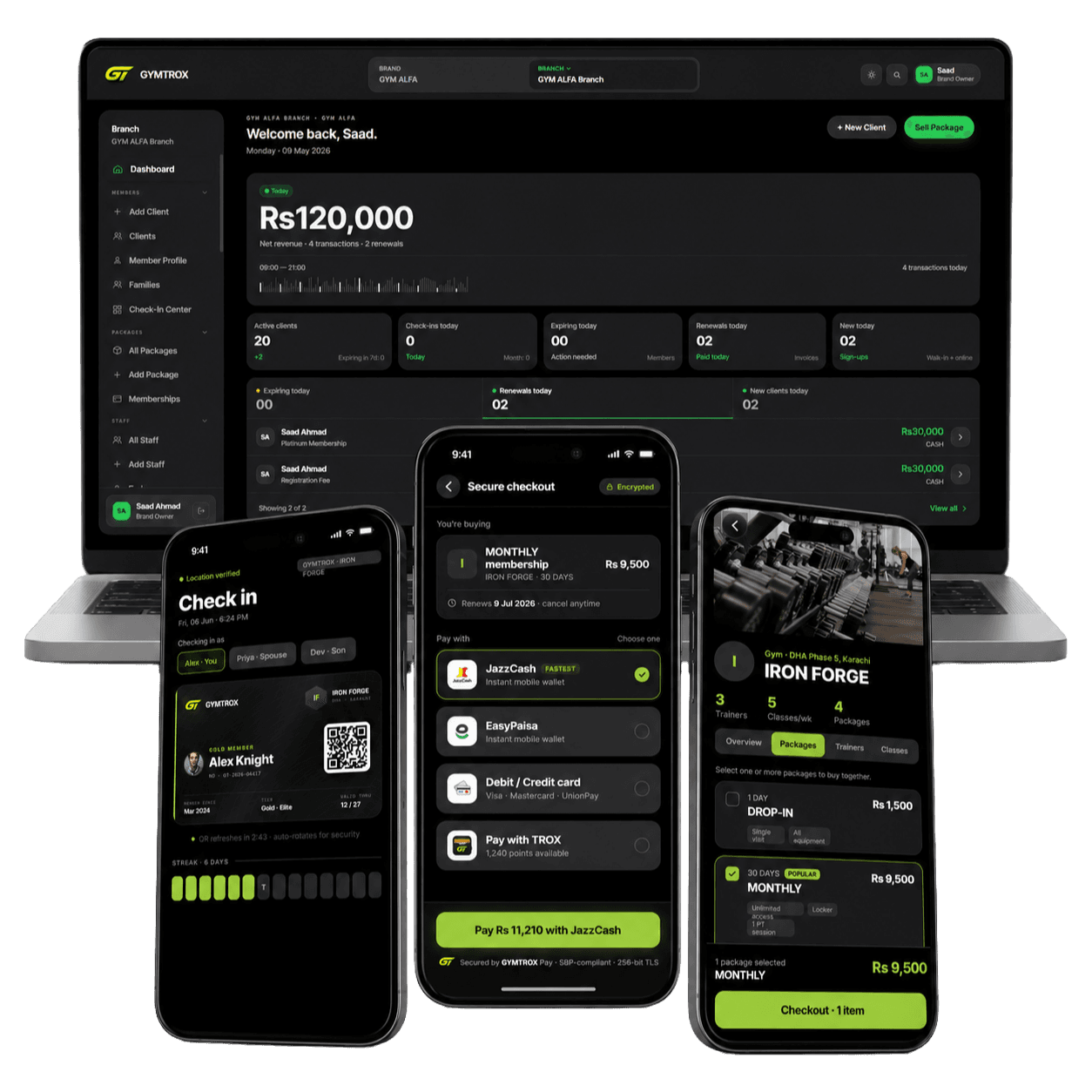
Gym owners can configure branches, packages, staff permissions, members, QR check-in, trainers, classes, POS, café items, invoices and reports from the dashboard. The gym can also appear in the GYMTROX marketplace so members can discover the location, review packages and purchase through the app.
Members then use the same app for memberships, check-in, bookings, workouts, nutrition and TROX rewards.
Register your gym with GYMTROX →
The bottom line
To start a gym in Pakistan, build the business around a specific customer, realistic local quotations and enough working capital—not only equipment enthusiasm.
Secure the right site, register correctly, buy equipment around demand, train the team and install your operating system before launch.
Planning a new gym or branch? Register your gym with GYMTROX.