25 High-Protein Pakistani Foods for Muscle Gain and Fat Loss
Protein supports muscle repair and can make meals more filling, but no single food automatically builds muscle or causes fat loss. Muscle gain still requires effective resistance training, while fat loss requires an appropriate overall calorie balance.
The amounts below are approximate. Protein changes with brand, cut, recipe, cooking method and serving size. People with kidney disease or other conditions affecting diet should follow guidance from their clinician or registered dietitian.
For healthy exercising adults, the International Society of Sports Nutrition position stand reports that about 1.4–2.0 grams of protein per kilogram of body weight per day is sufficient for most people seeking to build or maintain muscle. Individual needs vary. Read the open-access position stand.
Animal protein sources
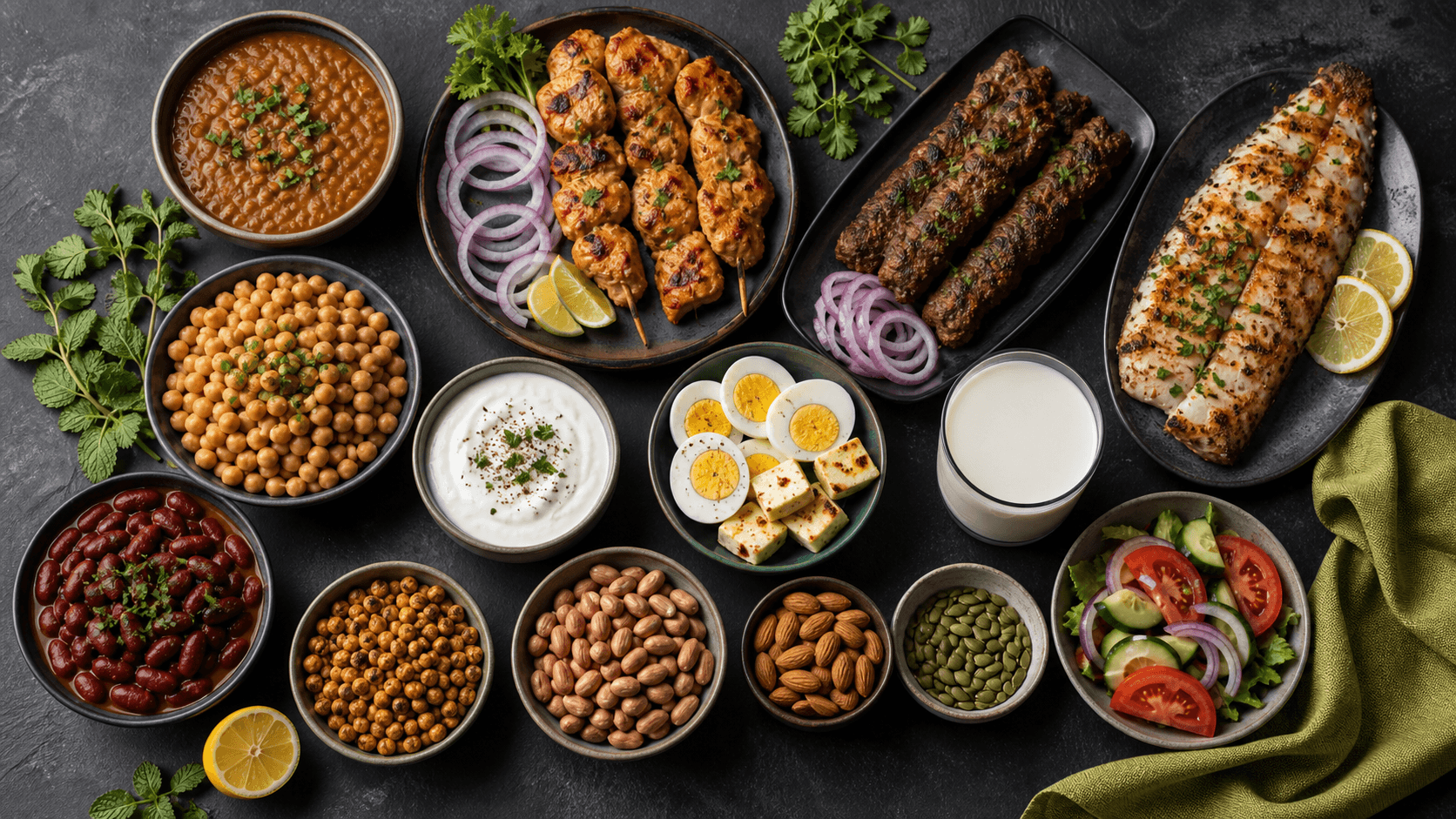
Chicken breast: approximately 30 grams per 100 grams cooked
Chicken thigh: approximately 24–27 grams per 100 grams cooked
Lean beef: approximately 25–27 grams per 100 grams cooked
Mutton: approximately 24–26 grams per 100 grams cooked
Rohu or other fish: commonly around 20–24 grams per 100 grams cooked
Tuna: approximately 25–29 grams per 100 grams drained
Prawns: approximately 20–24 grams per 100 grams cooked
Whole egg: approximately 6 grams per large egg
Egg whites: approximately 3–4 grams per large white
Milk: approximately 8 grams per 250-milliliter cup
Plain yogurt: commonly 8–10 grams per cup; strained yogurt may provide more
Paneer: often around 16–20 grams per 100 grams, depending on preparation
Plant protein sources
Masoor dal: approximately 17–18 grams per cooked cup
Moong dal: approximately 14–17 grams per cooked cup
Chana dal: approximately 14–17 grams per cooked cup
Boiled chickpeas: approximately 14–15 grams per cooked cup
Rajma: approximately 14–15 grams per cooked cup
Lobia: approximately 12–14 grams per cooked cup
Soybeans: approximately 28–30 grams per cooked cup
Tofu: commonly 10–15 grams per 100 grams
Roasted chana: approximately 6 grams per 30-gram serving
Peanuts: approximately 7 grams per 28-gram handful
Almonds: approximately 6 grams per 28-gram handful
Pumpkin seeds: approximately 8 grams per 28-gram serving
Whey protein: commonly 20–25 grams per scoop; check the product label
Build a higher-protein Pakistani plate
Start with one clear protein source, then add vegetables, fruit or salad, and a carbohydrate portion that fits your energy needs.
Chicken tikka with roti and salad
Dal with yogurt and a moderate rice portion
Egg bhurji with roti and vegetables
Fish with rice and raita
Chana chaat with yogurt
Lean qeema with vegetables and roti
Oil, ghee, cream and large portions can substantially change meal calories without adding much protein. Track the complete recipe rather than only its main ingredient.
Track protein and macros in GYMTROX
GYMTROX helps you set daily calorie and macro targets, log foods and meals, track water, and connect nutrition with your training goal.
Track calories and macros in GYMTROX →
The bottom line
Choose protein foods you enjoy and can afford, distribute them across the day and keep total calories aligned with your goal. Variety is more sustainable than forcing the same meal every day.