Push Pull Legs vs Full Body vs Bro Split: Which Plan Is Right for You?

The best workout split is not the one with the most complicated schedule. It is the one that trains your muscles consistently, fits your available days and allows recovery.
Push pull legs, full-body training and the bro split can all work. The difference is how they distribute exercises across the week.
What is a full-body workout?
A full-body session trains most major movement patterns in one workout: legs, pushing, pulling, hips and core.
Best fit: beginners, busy lifters and people training two or three days per week.
Advantages:
Each muscle can be trained several times per week
Missing one day does not remove an entire body part
Simple scheduling and exercise selection
Limitations: sessions can become long if too many exercises are added, and advanced lifters may need careful fatigue management.
What is push pull legs?
A PPL workout plan divides training into pushing muscles, pulling muscles and legs.
Push: chest, shoulders and triceps
Pull: back and biceps
Legs: quadriceps, hamstrings, glutes and calves
Best fit: intermediate lifters who enjoy training three to six days per week.
Advantages: related movements fit naturally together, volume is easy to organize and the plan scales from three to six sessions.
Limitations: a missed day can disrupt the rotation, and a six-day schedule may be difficult to recover from or maintain.
What is a bro split?
A bro split usually assigns one main body part to each day, such as chest, back, shoulders, arms and legs.
Best fit: experienced lifters who enjoy high-volume body-part sessions and can train frequently.
Advantages: focused sessions, plenty of exercise variety and substantial recovery time before repeating the same body part.
Limitations: each muscle may be trained only once weekly, and missing one session can mean skipping that body part for a long time.
Which split should you choose?
If you can train two days
Choose full body. Two well-planned sessions cover more than a partially completed multi-day split.
If you can train three days
Full body is excellent for beginners. A three-day PPL rotation can also work, especially if the sequence continues across weeks.
If you can train four days
Full body with different emphasis or another balanced split may be easier than forcing six-day PPL into four days. Choose the structure you can repeat.
If you can train five or six days
PPL becomes practical. A bro split can also suit experienced lifters who prefer focused high-volume sessions.
What matters more than the split name
Training consistently
Using controlled technique
Completing enough recoverable work
Progressing repetitions or load over time
Sleeping and eating adequately
Adjusting when joints, performance or motivation decline
No split compensates for constantly changing exercises or missing sessions.
Open the GYMTROX workout planner
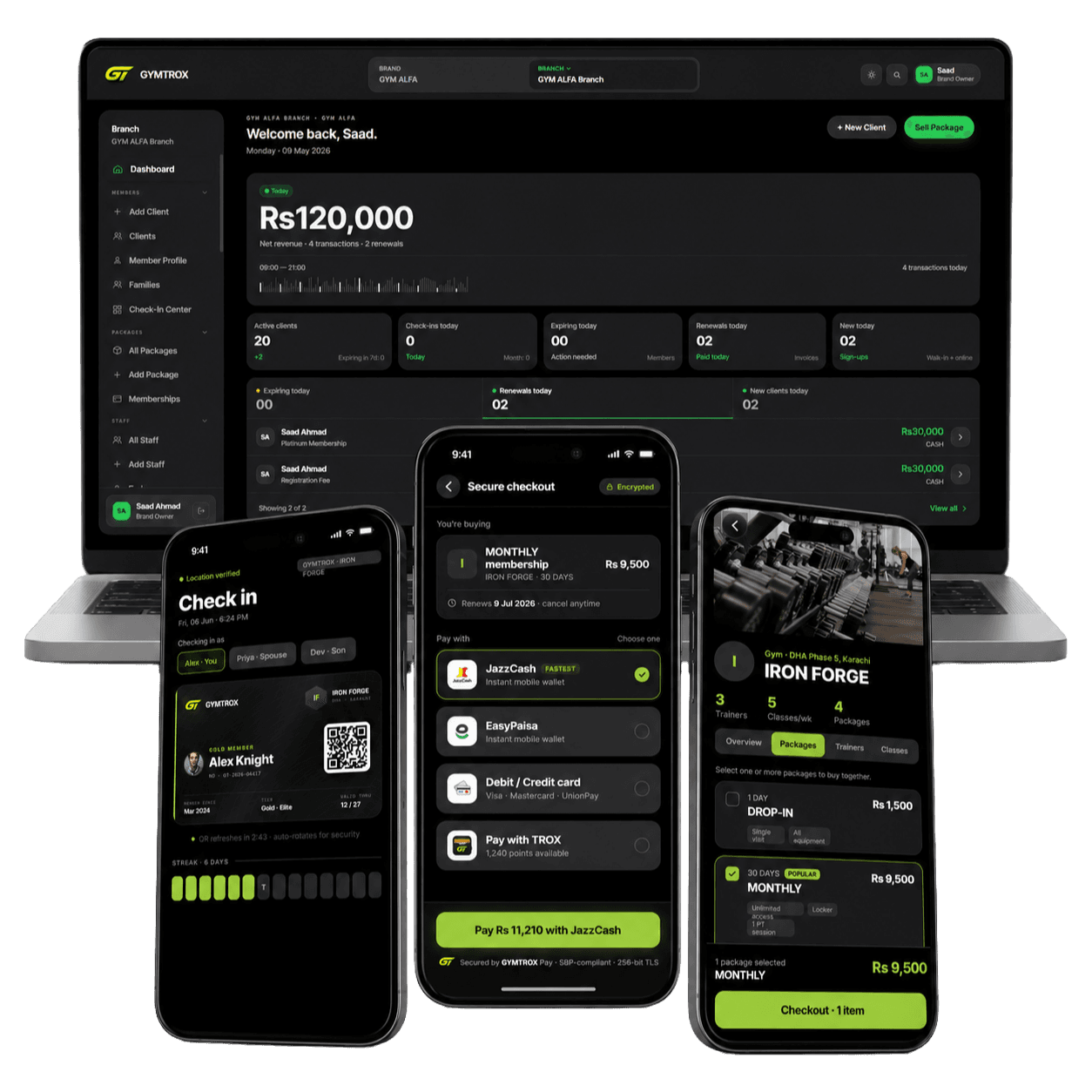
GYMTROX lets you create full-body, PPL or custom training days, assign exercises, log workouts and review session history.
The bottom line
Choose full body for simplicity and fewer weekly sessions, PPL for flexible higher-frequency training, and a bro split when focused body-part sessions genuinely fit your experience and schedule.
The best plan is the one you can recover from and follow for months.