QR vs Biometric Gym Attendance: Which Is Better?
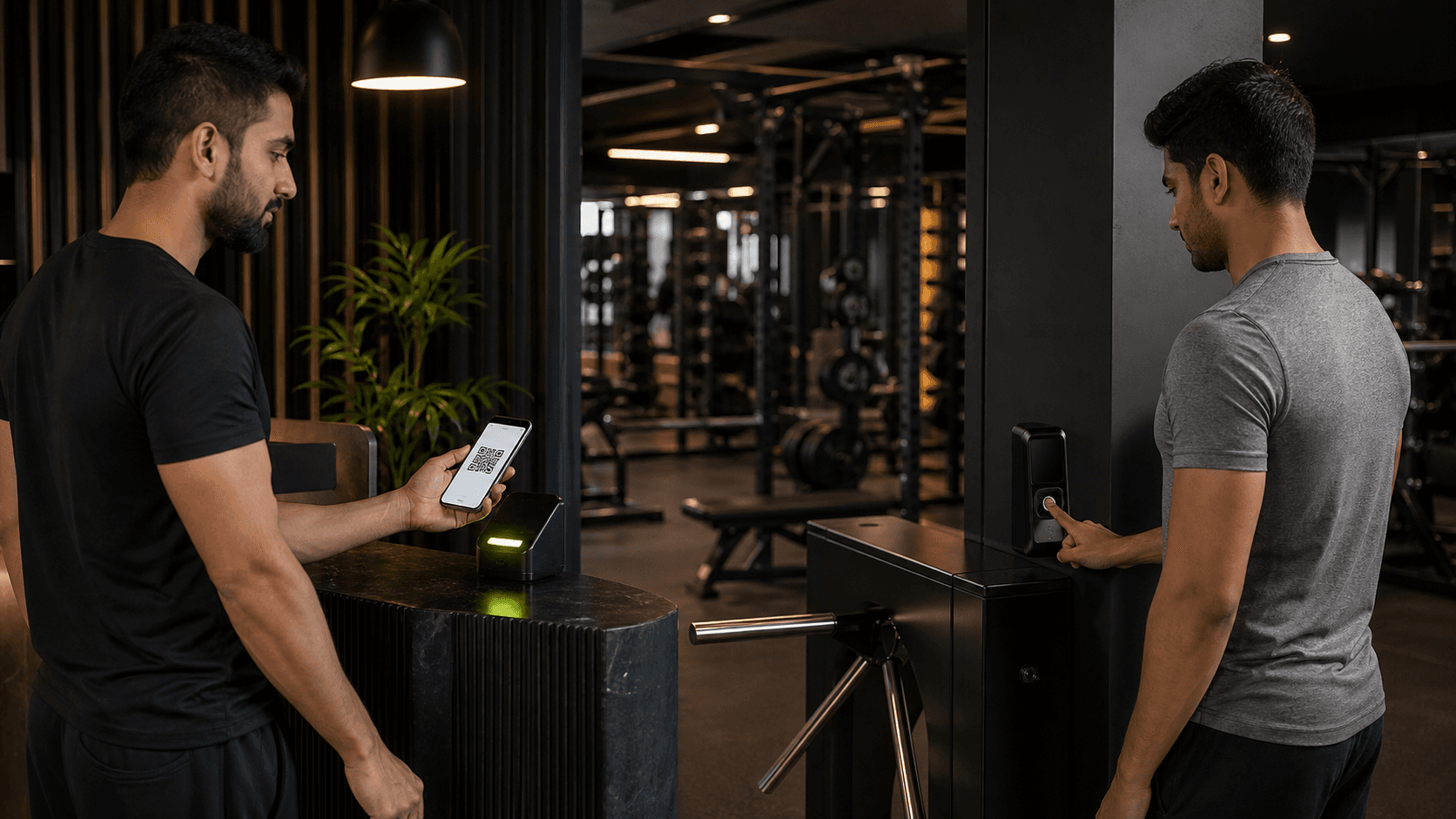
QR and biometric systems solve the same problem: recording who entered your gym and when. But they differ significantly in cost, security, speed, maintenance and the experience they give members.
A biometric scanner ties attendance to a fingerprint or face. A QR gym check-in system uses a code presented on a member's phone or scanned at the entrance. Either can work well, but the right choice depends on your gym's size, access model and appetite for hardware.
This guide compares QR vs biometric gym attendance so you can choose the right system without paying for complexity your gym does not need.
Quick answer: QR or biometric?
For most modern gyms, a dynamic, device-verified QR system offers the best balance of cost, speed and member convenience. It requires less dedicated hardware, works naturally with a member app and is easier to roll out across multiple branches.
Biometric attendance can be the better option for unmanned or high-security facilities where proving physical identity at the door matters more than flexibility, provided the gym is prepared for hardware maintenance and responsible handling of biometric data.
Some operators may benefit from a hybrid model: QR as the normal member experience, with manual or biometric verification available for exceptions.
How QR gym check-in works
A QR system identifies the member through a code. The member opens a digital membership card in the app and presents the code to a front-desk scanner, or scans a gym code using their phone.
Not all QR systems provide the same security:
Static entrance QR: one code displayed at the gym for every member
Static member QR: a permanent code assigned to one account
Rotating member QR: the member's code refreshes after a short time
Device-verified rotating QR: the code refreshes and only appears on an approved device
A static code is inexpensive but can be photographed or shared. Dynamic QR codes reduce this risk because an old screenshot stops working. Device verification adds another barrier against account sharing.
How biometric attendance works
A biometric system records a fingerprint, face or another physical characteristic during enrolment. At check-in, the scanner compares the new reading with the stored template before recording attendance or unlocking access.
Because the credential is attached to the person, biometric systems can make pass sharing and buddy check-ins more difficult. They are commonly considered for unmanned gyms, staff attendance and controlled-access facilities.
However, biometric attendance requires dedicated hardware, enrolment, cleaning, maintenance and careful decisions about how sensitive biometric templates are stored and protected.
QR vs biometric gym attendance comparison
1. Setup cost
QR: Usually lower. A gym may only need a phone, tablet, camera or scanner connected to its gym attendance software.
Biometric: Usually higher. Each entrance may require a fingerprint or face scanner, installation, access-control integration and backup power.
2. Check-in speed
QR: Fast when members open their cards before reaching the desk. A large, bright QR can be scanned in seconds.
Biometric: Also fast when the scanner recognizes the member immediately, but wet fingers, worn fingerprints, poor positioning or lighting can cause retries and queues.
3. Fraud prevention
QR: Security depends on implementation. Static codes are easy to share. Rotating codes, membership validation and trusted-device controls make sharing much harder.
Biometric: Naturally connects access to a person's physical identity, making casual pass sharing more difficult.
4. Member convenience
QR: Uses a device most members already carry. The same app can show the member's package, expiry, bookings and rewards.
Biometric: Members do not need to open an app or carry a card, but they must enrol and may be uncomfortable providing biometric data.
5. Hygiene and physical contact
QR: Contactless. Members present their phone without touching a shared surface.
Biometric: Face recognition can be contactless, while fingerprint scanners are shared touchpoints that require regular cleaning.
6. Maintenance
QR: Mostly software-based. A damaged scanner can often be replaced with another camera-enabled device.
Biometric: Sensors require physical maintenance and may need vendor support, firmware updates or replacement.
7. Multi-branch rollout
QR: Easier to deploy across new branches because member identity lives in the app and central platform.
Biometric: Every branch may need hardware installation and synchronization of biometric templates.
8. Privacy
QR: Relies on account and device identifiers rather than fingerprints or facial templates.
Biometric: Involves sensitive identity data. Gym owners must understand what the device stores, where it is stored, who can access it and how it is deleted.
The hidden weaknesses of basic QR attendance
QR is not automatically secure. A weak implementation can allow members to send screenshots to friends or reuse an old code.
A reliable QR gym check-in system should include:
Short-lived or rotating QR codes
Active-membership and package-expiry checks
Trusted-device verification
Duplicate check-in prevention
Branch and time validation
Clear attendance history and audit records
A controlled manual fallback for genuine exceptions
Without these controls, the QR is only a digital membership card—not a complete attendance-security system.
The hidden costs of biometric attendance
The scanner price is not the full cost. A biometric rollout may also require:
Installation at every entrance
Access-control locks and cabling
Backup power and network equipment
Member enrolment time
Replacement sensors and maintenance
Vendor support contracts
A fallback when recognition fails
Processes for protecting and deleting biometric data
Ask how the system behaves during a power failure, internet outage or scanner malfunction. Your front desk still needs a safe way to verify legitimate members.
Which system fits your gym?
Choose dynamic QR check-in if:
You want a lower-hardware, app-first experience
You operate several branches or plan to expand
Members already use an app for packages and bookings
You want contactless check-in
You need to launch new locations quickly
Choose biometric attendance if:
Your gym is unmanned or operates 24/7
The entrance requires strict identity verification
You are ready to maintain dedicated hardware
You have a clear biometric-data policy
Members accept biometric enrolment
Consider a hybrid system if:
You need QR convenience during staffed hours and stronger door access after hours
You want separate systems for member and staff attendance
You need a fallback for members without a working phone
How GYMTROX check-in works
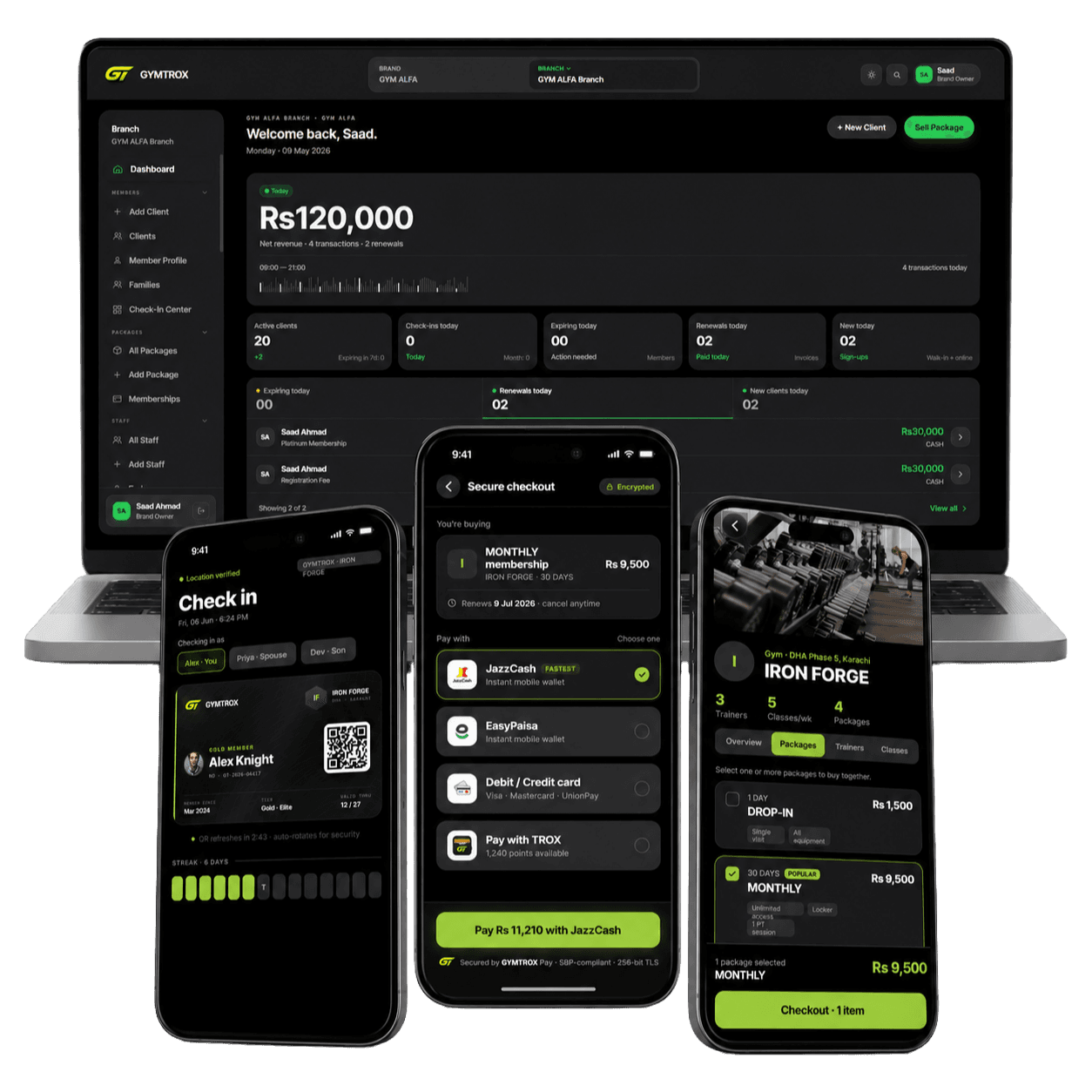
GYMTROX gives active partner-gym members a digital membership card with a live QR code that refreshes every three minutes. The dashboard scanner reads the code and records attendance against the correct member and branch.
Check-in is connected to membership validity, so an expired package cannot silently continue granting access. The system also prevents duplicate attendance records for the same branch and day.
To reduce account sharing, check-in is linked to a trusted device. When an account is used on an additional device, the member must verify it by email and a two-hour security restriction applies before check-in becomes available.
The member receives a quick app-based experience while the gym receives structured attendance history, branch reporting and a clearer audit trail—without enrolling fingerprints.
See GYMTROX QR check-in in action →
The bottom line
Biometric attendance offers strong physical identity verification, but it brings hardware, maintenance and sensitive-data responsibilities. QR check-in is more flexible and usually easier to scale, but only when the system uses rotating codes, membership validation and anti-sharing controls.
For most staffed gyms and growing multi-branch brands, device-verified dynamic QR provides the stronger overall balance. For unmanned or tightly controlled facilities, biometric or hybrid access may still be appropriate.
Compare the complete workflow—not only the scanner. The best gym attendance software should make entry fast for genuine members, difficult to misuse and easy for your team to manage.
Want to see a secure member check-in from both the app and dashboard? Explore GYMTROX check-in.