What a Personal Trainer Actually Costs in Pakistan (2026 Rates)

Ask three gyms what personal training costs and you will get three different answers — and usually no straight number until you are standing at the desk. Rates in Pakistan run from about Rs 1,500 a session to well over Rs 10,000, and the gap has less to do with the trainer's skill than most people assume.
This guide sets out what personal training actually costs in 2026, how per-session pricing compares to monthly packages, what legitimately moves the price, and what you should refuse to pay extra for.
The short answer
Entry-level trainer: Rs 1,500 – 2,500 per session
Experienced, certified trainer: Rs 2,500 – 4,500 per session
Senior or specialist trainer: Rs 5,000 – 10,000+ per session
Semi-private, 2–4 people: Rs 800 – 2,000 per person, per session
Online coaching: Rs 8,000 – 25,000 per month
Most people training seriously land between Rs 2,500 and Rs 4,500 a session, or Rs 25,000 to Rs 50,000 a month for a package of eight to twelve sessions.
Per-session versus monthly packages
Almost every gym prices packages below the per-session rate — typically a 15–30% discount for committing to eight or twelve sessions. That is a real saving if you use them, and a real loss if you do not.
Budget gym package: Rs 12,000 – 25,000/month, usually 8 sessions
Mid-tier package: Rs 25,000 – 50,000/month, 8–12 sessions with a certified trainer
Premium package: Rs 50,000 – 120,000+/month, 12–16 sessions, often including nutrition planning and check-ins
Two questions decide whether a package is worth it. Do unused sessions roll over? Many gyms expire them at month end, which quietly turns a discount into a penalty the first time you travel or fall ill. Can you switch trainers? If you have paid for twelve sessions and the trainer is a poor fit, you want that flexibility in writing before you pay.
What rates look like by city
Karachi (DHA, Clifton): Rs 3,000 – 7,000 per session
Islamabad (F and E sectors): Rs 3,000 – 7,500 per session
Lahore (DHA, Gulberg): Rs 2,500 – 6,000 per session
Rawalpindi: Rs 1,800 – 4,000 per session
Faisalabad, Multan, Peshawar: Rs 1,500 – 3,500 per session
Area matters more than city. A trainer in DHA Lahore and one in Johar Town may have identical qualifications and charge very differently, because rates track the gym's rent and its members' budgets far more closely than they track coaching ability. You can compare gyms in Lahore, Karachi and Islamabad to see how facilities differ by area before you commit.
What actually changes the price
Track record, not certificates alone
A certificate is a floor, not a ceiling. What you are really paying for is a trainer who has taken people with your body, your schedule and your injury history to the result you want. A trainer with five years of clients who stayed is worth more than one with three certifications and no retention.
Where the session happens
Home visits typically carry a 30–60% premium over the same trainer at their gym — travel time, fuel and the fact that they cannot stack clients back to back. If you have equipment at home this can still be good value; if the trainer is bringing bands and a mat, you are paying a premium for a worse session.
Specialisation
Post-injury rehab, pre- and post-natal, competition prep and strength coaching for older clients all command more, and reasonably so. These require knowledge a general fitness certification does not cover. Do not pay a specialist premium for general fat loss.
Who takes the cut
This is the part gyms rarely explain. When you buy PT through a gym, the trainer often receives only 40–60% of what you pay. Independent trainers keep all of it, which is why they can sometimes charge less and still earn more. It also means a gym's PT price tells you about the gym's commission structure as much as the trainer's value.
In-gym, home visits, or online?
In-gym is the default and usually the best value — full equipment, no travel premium, and the trainer is on their own turf. Home visits make sense if you have a decent home setup or genuinely cannot get to a gym; otherwise you pay more for less equipment. Online coaching at Rs 8,000–25,000 a month is far cheaper per week, but it is programming and accountability, not supervision — it works well for people who already know how to lift and badly for complete beginners who need someone watching their form.
What you should be getting
An initial assessment covering goals, injury history and a movement screen
A written programme you can see, not just whatever the trainer improvises
Progress tracked in numbers — weights, reps, measurements — not vibes
Undivided attention for the full session, phone away
Nutrition guidance within their competence, and a referral to a dietitian beyond it
A plan that survives the trainer being on leave
What not to pay extra for
Supplements sold by your trainer. Commission-driven advice is not coaching. Buy supplements separately once you have decided you need them.
"Diet plans" that are a photocopied sheet. If it is not specific to you, it is not worth a fee.
Sessions used as spotting. If most of the hour is you lifting while the trainer counts, you are paying for a rep counter.
Body composition scans at every session. Useful monthly; pure upsell weekly.
Certifications worth checking
Recognised credentials include ACE, NASM, ISSA, REPs and NSCA. Ask to see the certificate and check it is current — several require renewal, and lapsed certifications are common. A first-aid or CPR qualification matters more than most people realise and almost nobody asks about it.
Be aware that credential inflation is real here. Weekend courses issuing impressive-sounding certificates are widespread. If you have not heard of the issuing body, look it up before you treat it as a reason to pay more.
Red flags
Refusal to give a price until you have committed to a tour
Guaranteed results in a fixed timeframe
Pressure to buy a long package on your first visit
No written record of your programme or progress
Pushing supplements before addressing your training or diet
No trial session offered at any price
If you run a gym or train clients
Under-pricing PT is the most common mistake in this market. Trainers set a low rate to fill their schedule, then cannot raise it without losing the clients they built it on. It is better to charge properly and run fewer, better sessions.
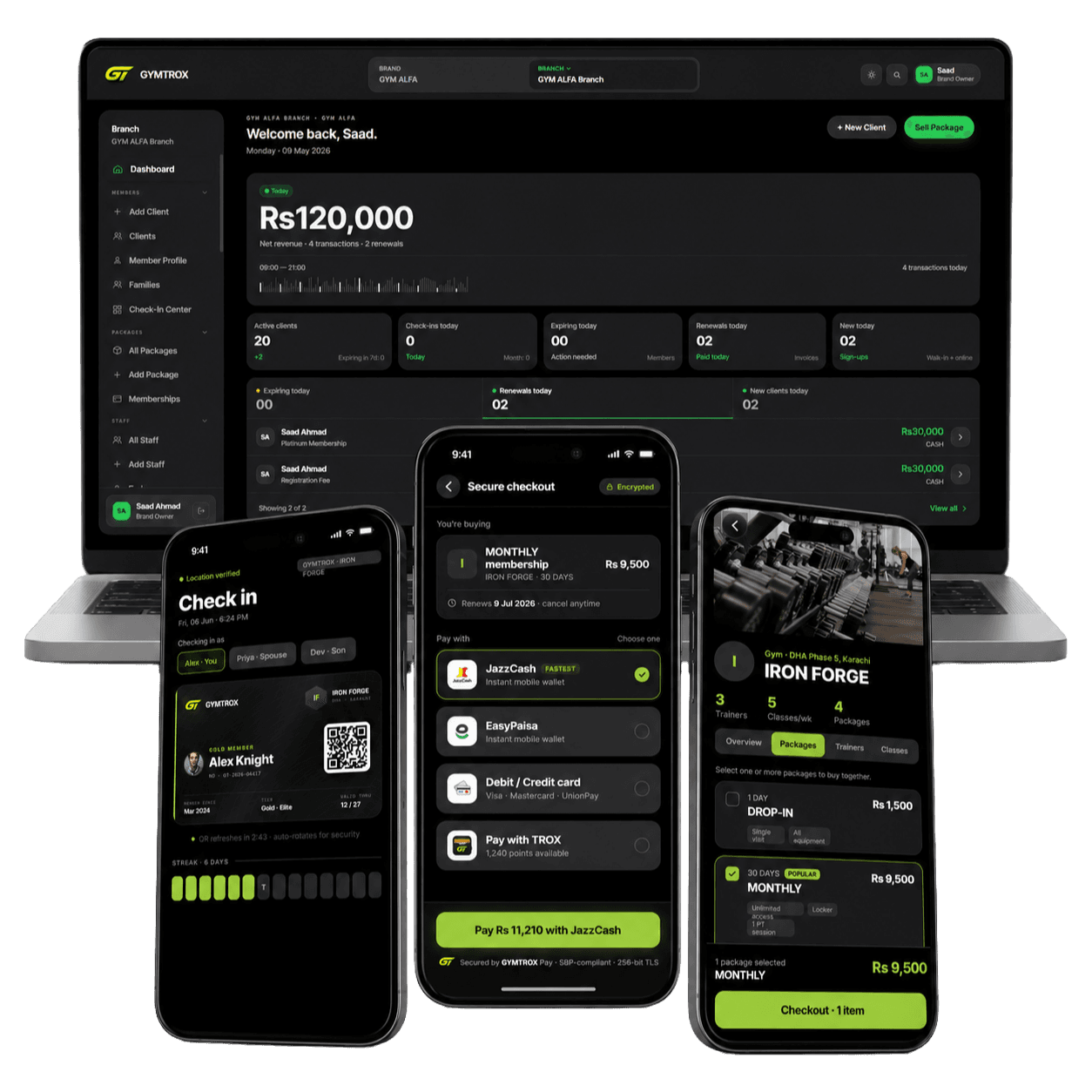
Operationally, three things separate a PT business that scales from one that stalls: publish rates openly so members are not negotiating at the desk, track sessions against what was paid for so nothing is delivered free by accident, and pay trainers on a schedule they can rely on. GYMTROX handles PT bookings, session tracking and trainer payouts alongside memberships and billing.
Frequently asked questions
How many sessions a week do I actually need?
Two is the common sweet spot — enough to learn the movements and stay accountable, while you train on your own the rest of the week. Three or more makes sense for rehab, competition prep, or if you genuinely will not train alone.
Can I negotiate the rate?
Often, yes. Off-peak slots, block bookings and semi-private sessions with a friend are the three easiest levers. Asking to split sessions with someone else can cut your per-session cost by half or more.
Is a more expensive trainer better?
Not reliably. Price tracks the gym's location and commission structure at least as much as the trainer's ability. Judge on client results, retention and how they run the first session — not the rate card.
Do female trainers charge differently?
Rates are broadly similar, though demand for female trainers exceeds supply in much of Pakistan, so the good ones book out quickly and can command more. See our guide to ladies gyms in Pakistan for what to look for.
Should I pay for the whole month up front?
Only after a trial session, and only once you have the rollover and trainer-switching terms in writing. There is no reason to pay for twelve sessions before you have seen how one goes.
The bottom line
The realistic personal trainer cost in Pakistan is Rs 2,500 to Rs 4,500 a session for someone genuinely qualified, or Rs 25,000 to Rs 50,000 a month on a package. Pay for a track record rather than a certificate, take the trial before the package, and get the rollover terms in writing.
Find a partner gym near you and compare trainers and rates →